So I am a bit ADHD, I lose interest in things or get distracted. Exercise is no exception to this, so every 4-6 weeks I change up my training program. Now it may be small changes, such as variations of the exercises I am doing. Sometimes I do a re think and change the whole thing. Now over the years I have acquired a fair bit of equipment and I will try to train different things. So for one block of training since I have kettlebells I do kettlebell training. I also have a weight set and for a block after that I might do a barbell block or use both pieces of equipment. To be honest, I have a bunch of equipment, but really the number one thing I have is my mind and my body. I don’t mean calisthenics necessarily either, I am talking about using my mind to lead my body. Recently I made some paralette bars out of pvc.
This piece of equipment is used to perform various gymnastic moves. I thought I would like to challenge myself and do something different. To be honest, I thought it would be easier to use these bars due to the helpful grip component and try out some moves. Turns out not so easy and to be honest, I kind of like that. It challenges me and it highlighted some areas I could improve. They were cheap to make too. I made them for $31 and about 30mins worth of time. That’s the thing I want to highlight in this article is that really it is your mind and your body that you are training and to be honest, if my equipment disappeared, I`d be upset but at the same token I don`t have to have equipment. You probably don`t either, seems when people make the choice to start exercising they have to get the latest gym wear and awesome shoes, etc. To be honest you don`t have to have all that kind of stuff. I was told that exercise cost too much. I suggested to this person 1. Could they afford to be unhealthy? 2. Exercise can be free or low cost. I built my paralette bars and many pieces of equipment many pieces are cheap or free. Really, it is about being creative if you have two buckets you could fill them with water and lift them up. You can use furniture or logs or a wheelbarrow or walk home from shopping and every time you stop do a different exercise move.
Exercise is about being creative and improving your health. It isn`t about the latest gym wear or shoes and we need to remember that when we put up barriers to exercise. Children are great exercisers and they are very creative many times using the world around them. Could you find ways to exercise using the world around you relatively cheap or free?
Do you like to have people smoking near you? I don`t. Do you like people with the flu, coughing near you and spreading their germs? I don`t. Do you like to drive your car without wearing a seatbelt and risk crashing? I don`t. If you become remotely offended in this article I really don`t care, but please think about your position before you attack me. You see I am confused, I am confused about why there is a movement towards not protecting humans against a long time enemy we have fought long and hard against for our survival. I am talking about disease.
Now I don`t know about you but I am vaccinated against a variety of diseases. Many of these jabs were not my choice but that of my parents. They exercised their parental rights to get me vaccinated just as they did when they made me wear a seatbelt in the car or a helmet when I rode a bike. Now in my opinion, these three things are all very similar. Each of them are designed to be preventative measures against insult to our body. It was also widely accepted back then that vaccinations like wearing a helmet was a safe way to protect your children. Now it appears the argument is vaccinations cause a variety of adverse reactions. I do wish to side note that many of these adverse reactions are extremely rare and the evidence that is relied on by many anti-vaccinators is a paper that has long been discredited and settlements in court about adverse reactions that have been taken out of context. People are now moving towards vaccinations being the boogie man that hurt people.
Now I am curious if any of these people were around when Polio was a big killer? I am also curious if they are vaccinated themselves? I wonder if these people are truly aware that the decisions they make affect people and populations around them. The recent Measles outbreak that has occurred is great evidence. Measles is no joke and neither is Polio or many other diseases. They argue it is their right to not vaccinate their child and send them to school. Do they drive their cars whilst their child is unrestrained? I am not arguing about what these people’s rights are but I am arguing about the general population’s right to be as protected as possible from disease, which on the whole is due in a large part to vaccinations. They seem to argue that it is ok to risk a child under 6 months who can`t be vaccinated. Not so much with words, but by merely having their child or them around to potentially pass on a disease show that they are ok with the risk. It is the definition of arrogance in my opinion. It is a misguided sense that it will never happen to me or my child.
Now I generally write about fitness and health. I get that this is an opinion piece, but it is an opinion based on common sense. We use to say, well it is survival of the fittest, but the game has changed. Humans have worked long and hard to reduce risks to our lives and that is part of the reason why our species flourish. It is simple for me there is no point writing about exercise or health if our lives were like they were 40 000 years ago, it wouldn`t matter. Things would not be like they are now without seat belts, helmets and vaccinations. I`ll leave you with this thought, millions of cars are driven and they pose a risk of accident and death. A seat belt makes a significant difference in survivability, but some people do suffer whiplash. Ask them if they preferred to crash without a seatbelt, the answer is obvious. So I ask how many outbreaks do we need to have before people start wearing their “seat belts”.
The last post was about sleep and how we don’t get enough. In this article I mentioned how important sleep is for recovery. If you haven’t heard yet, you don’t build muscle or get stronger when you are training/working out. After we have challenged our body, it improves various tissues and abilities to try and cope the next time it is challenged. So hitting the gym every day for 3 hours and working hard to work towards your goal, without adequate rest may be the reason you are feeling tired all the time and just feel crap. There is good news once you have identified the problem you can fix it. But what if you are still feeling sore and just seem to struggle? Well, there are various recovery methods that can be used and many are cheap that can help aid your body's recovery.
Firstly, just want to cover some quick information, muscle soreness often occurs 1-3 days after a big session this is known as DOMS (delayed onset of muscle soreness). If you are not sore after a session that doesn’t mean your body isn’t healing to get you, “them gains”. Something you should know our muscles will recover quicker than our neurological system. If this is new to you, let me explain, your muscles are the engine and the ignition system if your neurological system. Basically, your nervous system governs how much your muscles can give. The neurological system can take much longer to return to 100%.
So what can we do to aid the body to recover? Well, we have talked about sleep already. But there are other methods. The first one is just as, if not more important than exercise, it`s nutrition. The pre and post nutrition intake can make a big difference. Depending on what kind of exercise you are doing can dictate what kind of foods you could be eating. If it is intensive try to stay away from anything that can lead to an upset stomach or something that will be terrible if you vomit. Try to have a pre-workout meal about 1.5 hours before exercise this may mitigate the risk of vomiting. The pre workout meal helps provide the nutrients to fuel the workout and improve performance. As for the post workout meal, try to get your meal within 30 minutes after you train. Now this isn’t a hard rule but research has shown that 30 minutes after a session the body is at the optimal state to absorb the most nutrients to aid recovery. I`d recommend a pre-prepped meal for easy access with some protein and carbs. Also in the coming days, research shows that taking about 20-30g of protein every couple of hours can help keep the protein synthesis fires burning. So taking a heap of protein in one go may not be ideal.
So let’s talk water. Not hydration I assume you are doing this and I won`t go into depth about how important hydration is for recovery. But there other ways we can use water to improve our recovery. Firstly, the contrast shower, we use hot and cold water in an alternating fashion. This helps the body relax and begin the recovery process. I have seen multiple protocols for this, I personally use a 2mins hot and a minute’s cold. I repeat this for about 10 minutes. I will caution this can be tough as the cold feels really cold. I do contrast showers if I can’t get to a pool. I love to use the pool for recovery. When coming home from weightlifting training I jump straight into the pool and I begin to do some walking forwards and backwards, leg swings, arm swings, etc. Try to use movement that use muscles you have worked during your session. The cool water of the pool helps return the body back to a normal temperature state and relax the nervous system. The hydrostatic pressure of the water helps with muscle swelling (edema). An Epsom salt bath can be handy as well. The magnesium helps the muscle soreness and recovery and helps relax the nervous system. Dissolve about 500g into a hot bath and relax. Do not do this if you have high blood pressure or kidney issues.
Now back on dry land there are some key things we can do. The warm down is the biggest one. It helps the body works out metabolites built up from training and helps relax the body. After a weightlifting session I like to go for a 30min walk this way I get some recovery and I cover the exercise guidelines of moderate cardiovascular exercise. Now if you don’t have time for that, a simple 5min jog or a 5 minute walk followed by some stretching may be fine. Stretching is something we all should be doing be it around our exercise or just when we are in front of the TV. Stretching and yoga can help ease DOMs and relax us before bed. We can also do some self-massage of our muscles as well as this aids blood flow and helps relax our muscles like stretching. You can use a foam roller and all those instruments of release if you like.
The most important part of the recovery protocols I think is about returning the body back to its normal state and using blood flow to get nutrients to tissues that need it. It will relax the nervous system so the body can get to 100% regeneration mode. Try some of these out and see how they work for you. Get back to me in the comment section about what you like and dislike. I am still thinking of ideas for an online course. Contact me with what you would like to see.
We live in a fast paced world, it only seems to be getting faster and our time is constantly strained or misused. We have jobs, family, hobbies and whatever season of a TV show we are currently watching. We take things for granted, simple things really. These simple things play a massive role in our lives, more than we realise. To be honest, if we get a lot of the basics done right the bigger picture becomes easier to manage. One of those basics is sleep. Seems simple, but getting good quality sleep seems to be a forgotten art form for many.
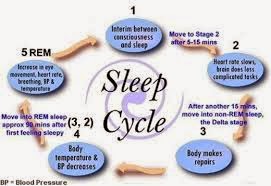
Does sleep matter that much? Whilst that is a general question the answer is obvious, yes it is. But why is does it matter has been researched for quite some time. Now you may have said “our body heals and restores”, you would be right. There are other reasons though, we heal when we are awake as well, but it seems we restore best when we are asleep. This may have to do with the fact that we are asleep and it seems like we heal and rest up since we are not consciously aware of time. We also seem to consolidate memory and begin to defrag the hard drive. Recently, scientists discovered that during sleep, our brain is very active in removing waste created by cells when we are awake. That is a big deal, but it is obvious we need sleep. Shift workers will often have an increased risk of various diseases due to disturbed sleep cycle. Sleep deprivation in rats leads to them dying. Now we are not rats, but sleep deprivation in humans can have some disastrous effects. Even with only a few hours less of sleep over a few days you may have found yourself craving sugar. That’s because of the hormone Leptin, it is affected by sleep duration and cannot signal properly that you are full. To make matters worse a peptide secreted in the stomach called Ghrelin signals an increase in appetite. That alone could be bad for those trying to lower their calorie intake.
So what can you do to improve sleep? Lay off the stimulants, energy drinks, coffee etc. I try not to drink coffee after 2pm and if I do I go decaf or have a fair bit of water to try and flush it. To add to the consumption theme try not to eat too much before going to bed it can make you uncomfortable and the thermic effect of digestion of food doesn’t help either. Alcohol has been shown to upset our sleep cycle so try to moderate your alcohol intake.
When you go to bed do you sleep on a bed of nails? Probably not, but it is important to have an environment that is conducive to you sleeping. The temperature should comfortably cool 60-75F and limit distractions in your room. Electronics in your room are a big distraction and have been shown to interfere with your sleep. So turn off the TV, put down the phone or leave them out in the lounge.
Try and get your exercise done earlier rather than later. I have a rule to try and not train after 9pm. For those of you that are morning people you may get your exercise out of the way no problem. It is important to try and be consistent with when you go to sleep and when you wake up. Try to keep it within 30mins or so of your goal sleeping and rising. Try to get to sleep before midnight. I have noticed a lowered training output if I sleep after 12pm no matter how good it is. It may be helpful to read or meditate, even a light stretch before sleeping will do wonders for your sleep quality.
But how many hours should I get? The general guidelines seem to be about 7-9 hours. How do I know if I slept well? Seems obvious, but I thought I’d measure it to find out. There are many ways to track this. I used the app Sleepbot on my phone, I put it on and then put the phone under my pillow and it tracked my motion whilst I slept as this seems to correlate with sleep quality and cycle. I personally was not a fan of having a phone under my pillow and trying to sleep. It was like my body wouldn’t go through a complete cycle when using it. I stopped using it and slept better. You may like to try a sleep log or a Fitbit or similar as they are on your wrist.
Sleep is a big part of your life, health, recovery and overall wellbeing. It is important that you get this one basic right. All of the supplements and recovery techniques cannot replace a good quality night’s sleep.
http://www.eurekalert.org/pub_releases/2013-10/uorm-tsp100913.php
http://www.sharecare.com/health/healthy-sleeping/lack-of-sleep-affects-appetite
Make a comment below about what future articles you would like. I am considering creating a online course, what should I make the course about? Comment or contact me via email
So I wrote about how not only should we set goals but we should set ourselves challenges and get us out of our comfort zone. You can read the article here but in that article I mentioned that my challenge was to swim 1 kilometer (0.65 of a mile). For some of you reading this it is no big deal but for me it was. I considered that it would take at least half a year of swimming to get to the point of swimming 1K. I went to the pool last week, I asked my partner to go with me as she is a great swimmer and I figured I might need someone to save me from drowning. You see I wanted to see how far I could swim in a session much like testing before starting an exercise program. Well it turns out that in one session I hit my challenge I set for myself. Yep I managed to swim 1k, I was really surprised by myself and I will mention that I did stop a couple of times for short rests. So I have upgraded my challenge to swim 1k without stopping. So to get to that I plan to swim 500 meters first without stopping, gradually progressively overloading how much I can do by adding 100-250m each week.
I am really keen to get your comments back in regards to your challenges and how your exercise testing and programs are coming along. For those of you that are reading for the first time I have linked the other articles I have written to help you set your challenges, test yourself and plan a exercise program.
So you read the last article and if you didn’t, read it here. My previous article looked at some tests that you can do to find out where you are before you start an exercise program. You should have a program to follow. You could pay someone to do it or you can educate yourself on how to write one. That way you can just go ahead and see if you can hit your goal without anyone else’s help. This article will provide a little bit of guidance to help you design your own program.
First thing is you need to determine your situation. You are an individual and things like age, gender, work and family life as well as medical history and even self-confidence will determine what your plan will look like. Your goal/challenge will play a huge role as well, you wouldn’t write a plan to swim a mile then take up boxing and not swim at all.
So let’s get to some variables of the plan. This includes repetitions, sets, rest, frequency, intensity, tempo, progressive overload and types of exercises/activity. Repetitions (reps) refers to how many times you do a particular exercise or movement e.g. 12 reps bicep curls. Repetitions will have a relationship with intensity. Generally the heavier the weight (intensity %1Repetition Max) the less reps you will be able to do. If you are trying to improve strength without putting on to much muscle mass you would use 1-5 reps with an intensity of 85%-100% of your 1RM. If you are trying to get bigger muscles use the 8-12 rep range with intensities of 60-85% of your 1RM. Now if you want to increase your endurance use 15-20 reps with greater than 40% of your 1RM. Now I am aware that I am using resistance examples but you could use cardio based exercise. Cardiovascular examples include 3 repetitions of sprints or running 1 repetition of a mile. These examples can be linked to intensity as well. Cardiovascular exercise intensity is often measured as heart rate BPM (beats per minute) or percentage of maximum heart rate. These are measured by a HRM (heart rate monitor) For example 3 sprint reps at 80-90% of maximum HR or 1 mile of running at 140-150bpm. Rate of perceived exertion (RPE) could be used for either modes of exercise whereby the exerciser will chose a rating off a scale to describe how hard they are working.
Now I briefly want to talk about tempo many people these days pay no attention to tempo but it can be a real game changer. Have you ever been at a gym and seen a guy doing a bicep curl slowly down and quickly up? That is an example of tempo. Tempo is how long you should take to lift the weight up, pause, put the weight down and pause. Tempo is measured in seconds and it often expressed 2110 as an example. So 2 seconds to lift the weight up, 1 second to pause, 1 second to lower the weight and no pause at the bottom. The table below can give you some guidance. Keep in mind that every one of these variable are related and if you normally do a weight with no tempo and then you slow it down to suit a specific tempo that weight will get hard real quick. Tempo can also be used in cardiovascular training you may run a mile in a set time period say 1 mile in 7 mins.
So I covered the use of reps and intensity but you don’t generally do 10 biceps curls on their own and that’s that because we need to challenge the muscles to grow. You do sets which is basically how many lots of reps you will do. So if you do 8 squats you may rest and do another set which means you did two sets of eight reps or 2x8. It is important to understand that all of these variables are interrelated with each other. So for reps 1-5 you may do 4-7 sets, reps 8-12 sets would be 4-8 and endurance 15-20 reps would be 2-4 sets. So you will notice that for the greater amount of reps for endurance there are less sets to be done. I explain it like a see saw the more reps you do in a set the less sets you will do. Please note for cardiovascular training these may be different you won’t likely do 2x20 mile runs especially if you are starting out.
Rest is often overlooked but I believe it can be one of the most crucial variables of a program. Why you ask, well if you shorten or lengthen rest periods it can change how your body responds. But to keep this basic I’ll give you some basic rest times that accompany the sets, reps and intensities. The strength 1-5 range will see people rest 2-6 mins, muscle building 8-12 reps 2-5 minutes and endurance 15-20 reps 30secs to 2 minutes. These are all done for certain reasons mainly to give the body a chance to recover from the previous sets and reps efforts.
Leading from rest is frequency or rest between sessions I like to call it. This is about how often you exercise. The American college of sports medicine recommends 15mins of cardio a week and resistance done 2-3 times a week. But how many days per week? Well that’s up to you but I would recommend alternating cardio with resistance or upper and lower body workouts. Be aware that if you have a big session doing upper body you wouldn’t do upper body the next day. Frequency will depend on your plan design, the harder the session depending on what you did the more rest you may need between sessions.
Now that I have explained some of the other variables I will introduce volume. Volume is the amount of work that you are doing in a session. It is calculated in resistance training by sets x reps x load e.g bicep curls 3x8x20lbs = 480lbs and that is in one session and as you can see it quickly adds up. Other ways of measuring training volume are miles covered total or time at a certain HR (heart rate). It is important to understand that total volume is measured per session and totalled for the week. To much volume and you can burn out or hurt yourself, not enough and you may not be getting all the benefits you could for your time. Prescribing volume will depend heavily on what your program has in it. I know that Olympic weightlifters measure their programs volume with tonnage. Side fact 1980’s Bulgarian weightlifters over a year may lift 41 000 tonnes of weight.
Planning the order and type of exercises will depend on what you do you want to achieve. Generally exercises are ordered from compound to isolation exercises, heaviest and most taxing to easiest. This may seem obvious but if you do 3x8 of bicep curls and then try to do some chin-ups which your biceps are heavily involved in, your chin-ups performance may suffer. So you would do bench press before you do dumbbell fly’s or you would squat before you did leg extension. To add fuel to the fire if you do cardio before weights or weights before cardio has been contentious within the research. It has been shown it depends on what you are trying to emphasise so this should be taken into account.
Finally the main thing we need to remember is that we are trying to improve something whether it be running further or faster, lifting heavier or more reps we always need to be improving. If you are not progressing you may need to look at your plan or give it a bit more time and hard work. This variable is known as progressive overload and to put it into a simple example you may start walking for 10 minutes each day and every week add 2 minutes to each day and over the course of a year you will increase your walking time a hell of a lot. The body adapts over time but as a caveat via the S.A.I.D principle, (specific adaptions to imposed demands). So keep in mind whilst the example may get better at walking that doesn’t mean they will get better at squatting and heavy weight. So now you are asking how do I go about overloading? Well there are a few ways, you may decide to add a rep each week if you can or instead of 8 reps you do 12. You may decide to add a pound or 0.5 of a kg each week or an extra minute to your run. It is about those small steps that your body can adapt to so you improve gradually, safely and for a long time.
So there you go these are the main variables that you can manipulate to build a plan. Keep in mind that all of the variables are all interconnected and will effect each other. Take it easy and record it in a journal so you can log each session. That way when you design a new plan you have notes about your previous sessions to help guide your.
Like most things in science there are a few different ideas on how many reps, sets and rest times should be used for strength, hypertrophy and endurance. Please keep that in mind if you find that someone tells you that hypertrophy (muscle building) is 10-12 reps as an example and it is different from information here.
The new year has dawned and if you have set goals and/or challenges most likely at least one is health and fitness related. If your a physical enthusiast already this article will also be of some help. You see when you open a bank account it starts with zero and you put money into it. You can always see a balance and understand how your money is going. The human body is a little bit different. Often we will see if we put on fat mass or muscle mass, it can be quite obvious. But other markers used in health and fitness are a little less easy to see and should to be measured. After all how do you know if you are improving?
There are thousands of tests we could do. To be honest a blood test is a great idea I think. You can get an idea about how things are going. This can be done via doctors, in some countries private companies can provide these kinds of services. But within the realm of health and fitness is exercise, to improve you will most likely be using some form of plan. Whether you're chasing a stronger squat or maybe you want to run a certain distance in a certain time, there will be a test of some kind that can be used to find where you're at. Now it is important that you choose a test that is valid for what you want to test. You wouldn't use a strength based test to test aerobic endurance. Please remember the law of specificity applies and some tests will have a skill component. There are plenty of studies about some tests having a higher skill based component then others e.g vertical leap, higher skilled jumpers can jump higher.
I am going to write about two tests you can use and either you may love or hate. These can be used to give you a baseline of where you are at. The first one is a staple and you probably have done it and hate it. The (cue the evil music) beep test. The beep test or multi stage fitness test is still used by many organisations. The test allows you to test how much oxygen your body can maximally uptake. It uses running a very common form of exercise and it relates heavily to the cardiovascular system, endurance and aerobic capacity. This test is also simple to do and yes you could do other tests some can cost you a great deal of money that will test these variables. The beep test is conducted over 20m(65ft) and you can find a mp3 or a youtube video online. You really just need to find a suitable area to set up some markers of some kind and after a suitable warm up ,start the mp3 and take the test. Be sure to record what number you finish on. You can use the resources posted here to help fill in the gaps. Be aware this is a maximal test and you should be of some reasonable shape with no health problems, particularly cardiovascular problems. For those of you that can't take this test you can do a sub max test such as a Rockport fitness test.
Now for the second test maximal strength, I am throwing one out I love, the one repetition maximum (1rm). This is a max strength test that can be done with many different exercises such as the bench press, squat and dead lift. Generally the 1rm isn't done with isolation exercises such as the bicep curl. It is a hard test and does rely somewhat on how skilled you are at the movement. As with many tests motivation will also be a factor. This test though on paper can seem simple but start and light and work your way up.Yes there is a protocol to follow and it is important to note whilst there is a protocol there is still some debate about how to best find the 1rm. Use this video as it shows the protocol for the Bench press and use the percentage changes and rest times. This protocol can be used for for other exercises. Make sure you have a spotter and if you are new to all of this preferably get some help from someone with experience.Consider using the 5rm or 10rm which means you will use lighter weight and in theory limit the chance of injury. After you have this 1rm you can use a calculator to find out the various percentages. By the way calculators will use different equations, this one gives some different equation answers so you can choose.
Now be warned these are tests and if you are not up to it or max testing is contradicted you can use other tests. Make sure the test is actually testing what you want to test and make sure you can do it safely and it is repeatable to be tested in 6-12 weeks. I would love to hear about what tests you chose and why and what you got on them. Comment below and share.